Before You Buy Anything
Spend the Money on the Antenna First
A modest radio on a good antenna beats an expensive radio on a poor one, every time and by a wide margin. If the budget is fixed, put it into wire, coax and height.
Used Equipment Is a Real Option
Amateur gear is generally well cared for and holds up for decades. A used radio from a club member, a hamfest or a reputable dealer is often the best value there is.
Check What Your License Allows First
A Technician license gives you very little HF. If you are not yet General, a VHF/UHF handheld will see far more use than an HF radio you cannot legally transmit on.
Look for Built-In USB Audio
If you might try digital modes, a radio that presents itself to a computer as a sound card over one USB cable saves you an interface and a lot of fiddling.
A First HF Radio
The radio that gets you on the worldwide bands. Prioritize a good receiver and a waterfall display over raw transmit power — you will spend far more time listening than talking, and seeing the band is how you learn it.
IC-7300
A direct-sampling SDR with a color touchscreen waterfall, built-in antenna tuner and a single USB cable for digital modes.
Suits: Most people, most of the time. It has been the default recommendation for a first HF radio for years and remains hard to argue with.
Icom now also sells the IC-7300MK2, an updated version with a cleaner receiver and transmitter, HDMI and network connections, and a built-in CW decoder.
FT-710
Yaesu’s SDR in the same class, with a large display and a well-regarded receiver.
Suits: Anyone comparing against the IC-7300. Try both if you can — the difference is mostly how the menus and controls feel to you.
FT-891
A compact HF radio with no waterfall, trading the display for size and a lower price.
Suits: Mobile installations and operators who would rather put the money into an antenna.
No built-in tuner. Budget for an external one.
G90
An inexpensive SDR with a small waterfall and a built-in tuner.
Suits: Getting on HF for the least money without buying something you will immediately resent.
Base Stations
Radios that live on the desk for good. Above the first-HF class you pay for a receiver that copes with crowded contest and pileup conditions, a second receiver, a bigger screen, more knobs and sometimes more power. Worth it if you chase DX or contest; not needed to enjoy HF. Lineups checked on each maker’s site, 22 Sep 2026.
IC-7610
A direct-sampling SDR with two fully independent receivers and a large touchscreen.
Suits: The natural step up from an IC-7300: listen to two bands, or both sides of a split pileup, at once.
IC-7760
Icom’s high-power radio, built as a separate control head and RF deck joined by a network cable.
Suits: Contesters and DXers who want high power without a separate amplifier, and the noisy, hot part of the radio off the desk.
FTDX10
A compact hybrid SDR: a narrow roofing-filter receiver with an SDR band scope, in a desk-friendly size.
Suits: Operators who want a top-tier receiver for pileups without the size and price of a flagship.
FTDX101MP
Yaesu’s flagship: a hybrid SDR with two receivers, a large display and plenty of knobs, in a high-power version with its own external power supply.
Suits: Serious DX and contest stations that want the most receiver Yaesu makes.
TS-890S
A down-conversion radio with roofing filters, a 7-inch color display with band scope, and a built-in antenna tuner.
Suits: CW and phone operators who like a traditional front panel and a well-regarded receiver.
K4
A direct-sampling SDR with dual receive, a 7-inch touchscreen and familiar knobs. It can be upgraded later to the K4D (diversity receive) or K4HD (added high-dynamic-range module) without soldering.
Suits: Operators who want to start with one radio and grow it, and those used to Elecraft’s K3 controls.
FLEX-8400 / FLEX-8600
Network-connected SDRs run from software on a computer or tablet. The M versions add an 8-inch touchscreen and knobs, so no computer is needed. The 8600 adds more receivers and sharper filters for contesting.
Suits: Operators comfortable with computers, and anyone who wants to run the station remotely over the internet.
Aurora (AU-510 / AU-520)
FlexRadio’s newest series, with a high-power amplifier built into the radio. M versions have the front panel.
Suits: Stations that want high power in one box. Check FlexRadio for availability: they were taking deposits in September 2026.
Portable, POTA and SOTA
Radios you carry. Weight, battery draw and how well the thing survives weather matter more here than features. Almost everything in this category runs low power, which is less of a handicap than it sounds.
IC-705
A battery-powered all-mode portable covering HF through UHF, with the IC-7300’s interface and built-in GPS, Bluetooth and Wi-Fi.
Suits: Operators who want one radio for the park, the summit and the desk.
No internal antenna tuner — most owners add one.
KX2 / KX3
US-built, very light, with a receiver that outperforms radios several times the size and price.
Suits: Serious portable operators, especially on CW. The KX2 is small enough to operate held in one hand.
TX-500
A sealed, weatherproof metal slab with no protruding controls, built to be used in genuinely bad conditions.
Suits: Anyone operating in rain, snow or sand who is tired of worrying about the radio.
X6100 / X6200
Compact battery-powered SDRs with built-in tuners at a fraction of the price of the alternatives.
Suits: Trying portable operating without a large outlay.
QMX
A tiny, very inexpensive CW and digital transceiver, sold as a kit you build yourself.
Suits: CW operators, and anyone who wants to understand their radio by soldering it together.
Handhelds
Most operators’ first radio, and the one that gets you onto local repeaters and into nets. The cheapest ones work, but build quality, receiver performance in strong-signal areas and the quality of the supplied antenna vary enormously.
FT-60R
An analogue dual-band handheld with a deserved reputation for surviving anything.
Suits: A first handheld you will still be using in ten years. No digital modes, and none needed.
FT-70D
Analogue FM plus Yaesu’s C4FM digital voice.
Suits: Areas with System Fusion repeaters.
ID-52
A well-built D-STAR handheld with a large display and dual receive.
Suits: D-STAR areas, and operators who want the better screen.
AT-D878UVII
A capable DMR handheld with built-in APRS and a large user community writing code plugs.
Suits: DMR, which is where much of the digital voice activity is.
Expect to spend an evening on the code plug. Everyone does.
Budget Handhelds
Very inexpensive dual-band handhelds that genuinely do work.
Suits: Finding out whether you enjoy this before spending real money.
Receivers overload badly near strong transmitters, and the supplied antenna is usually the weakest part — a better antenna is the single best upgrade.
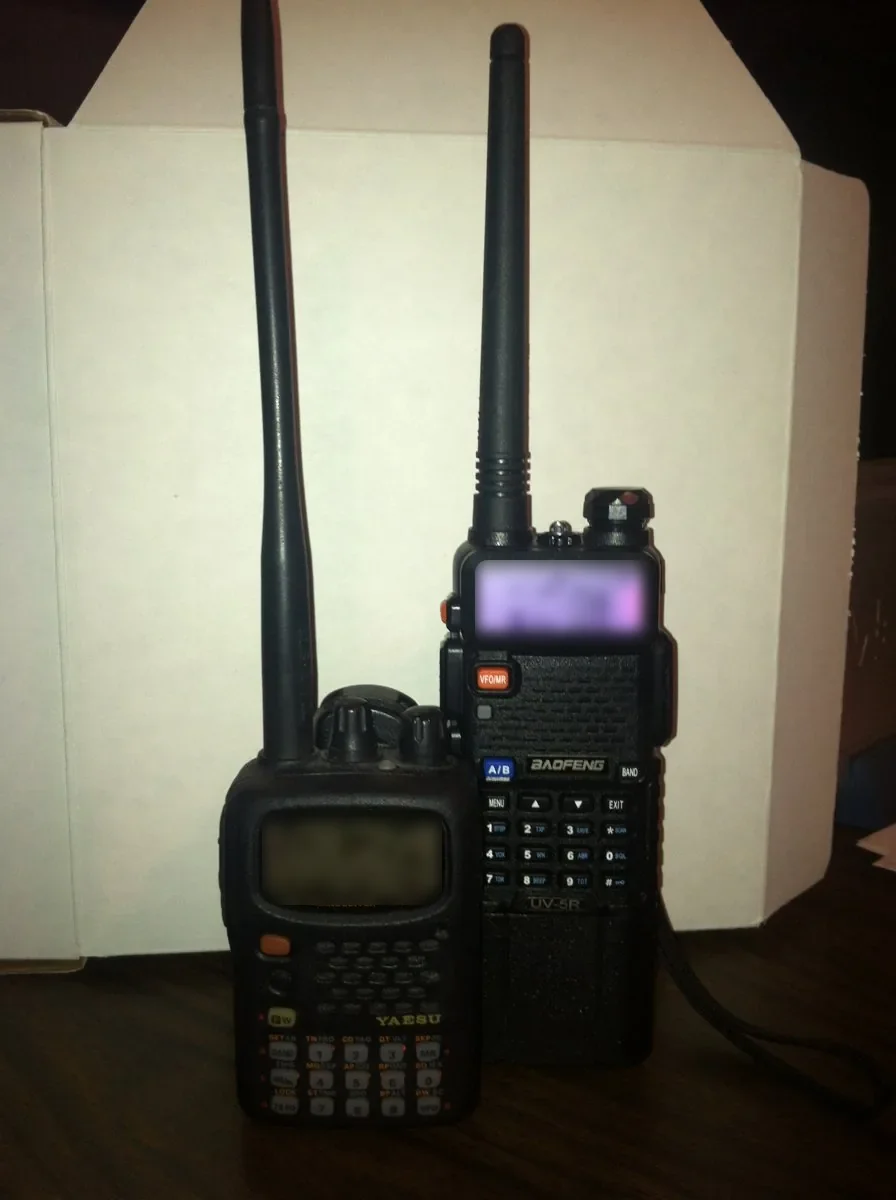
Two generations of handheld: a Yaesu VX-5 (no longer made) beside a budget Baofeng UV-5R. Both are dual-band 2 m and 70 cm FM radios.
Photo: OneShack
Shack-in-a-Box
One radio covering HF, VHF and UHF on every mode. Convenient and space-efficient, at the cost of being slightly less good at each individual job than a dedicated radio would be.
FT-991A
HF through UHF, all modes, with a built-in tuner and a spectrum display.
Suits: One radio, one power supply, one desk. A common choice where space is tight.
IC-7100
HF through UHF with a detachable control head designed for mobile installation.
Suits: Vehicles, and shacks where the radio body needs to live out of sight.
IC-9700
VHF, UHF and 23 cm all-mode — no HF — with full duplex operation.
Suits: Satellite work, which is what most people buy it for.
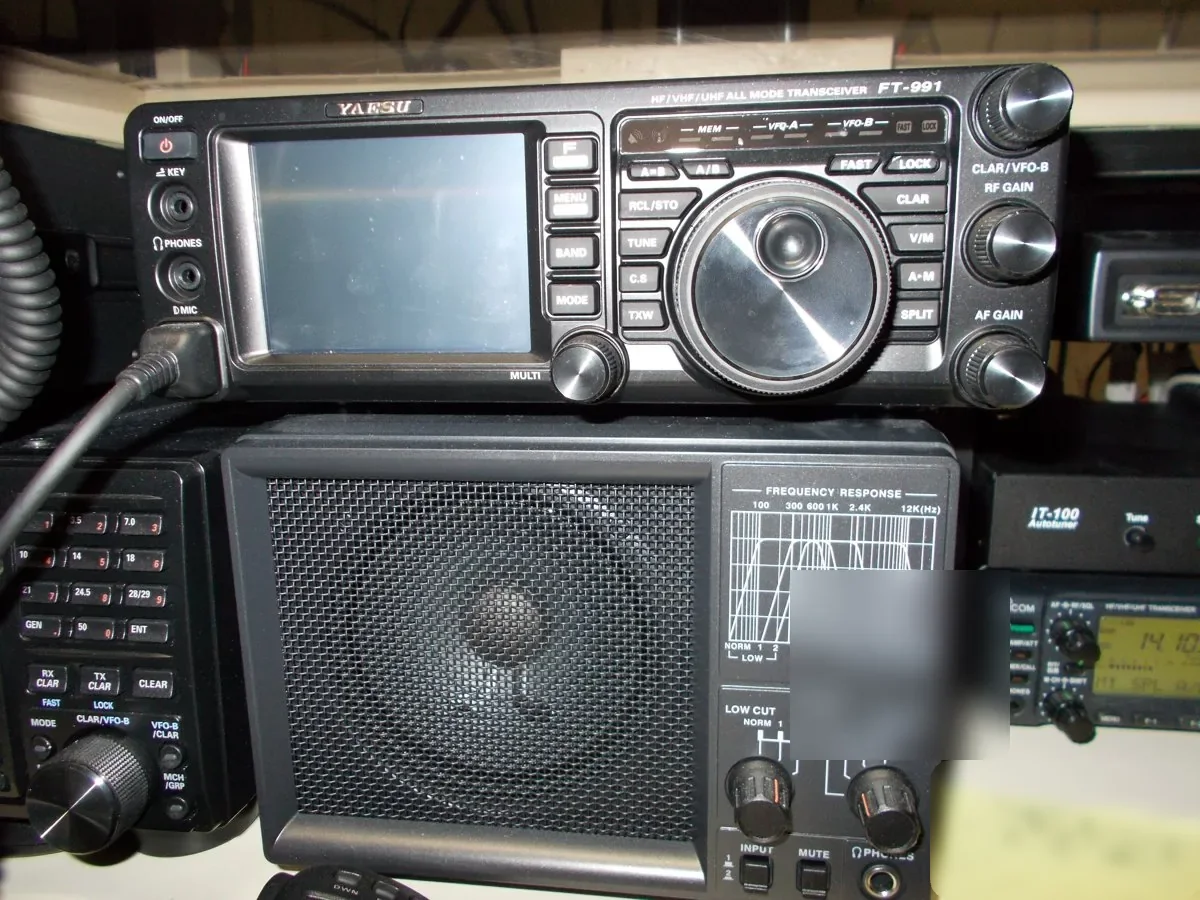
A Yaesu FT-991A on its external speaker: HF, 6 m, 2 m and 70 cm in one box.
Photo: OneShack
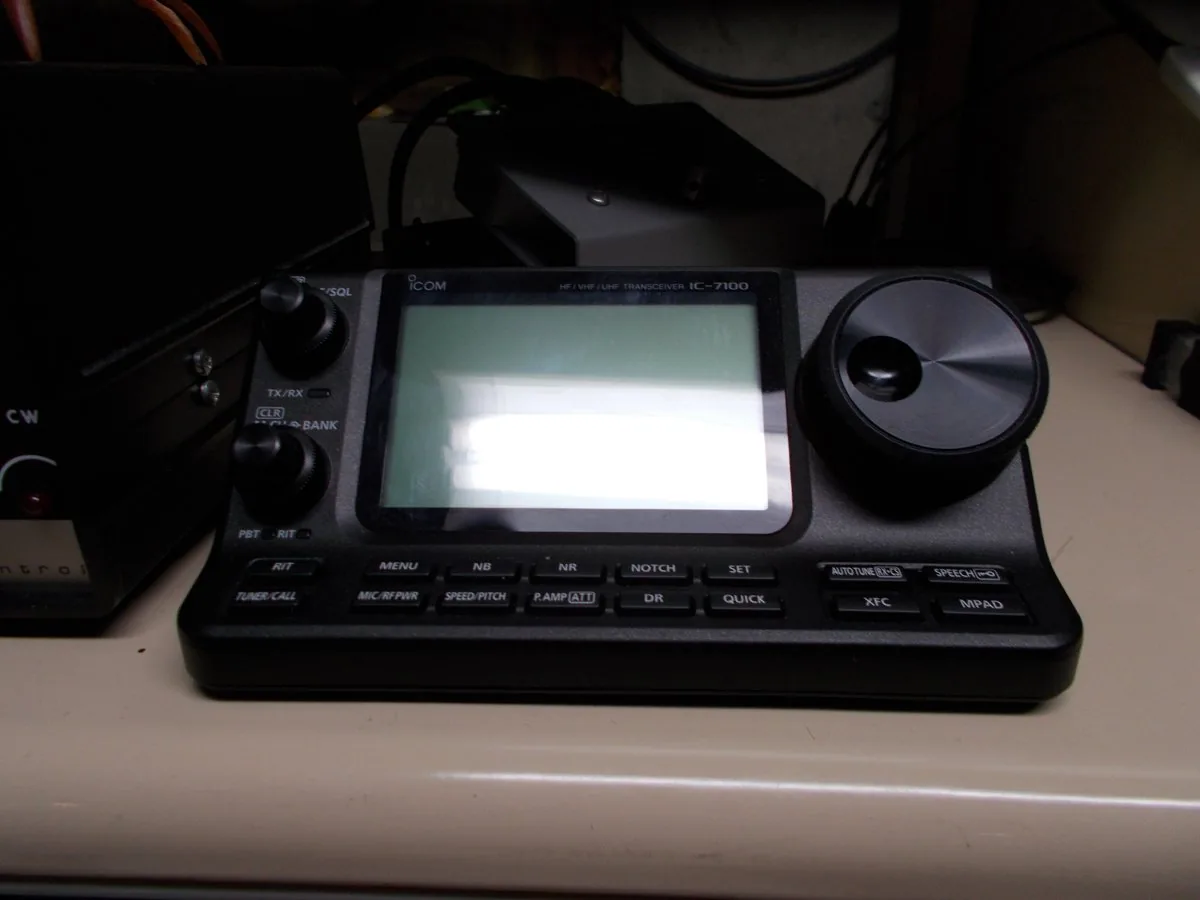
The control head of an Icom IC-7100. The radio itself lives out of sight, connected by a cable.
Photo: OneShack
Popular Used Radios
Radios no longer made new that are still easy to find second-hand, well supported by their owners, and good value. HF, VHF/UHF, mobiles, base stations and handhelds are all here; the tag on each card says which. Each one was checked as out of production on 24 Sep 2026. Read “Buying used: what to check” below before you hand over any money.
IC-718
A plain, rugged HF radio with a small, simple display and no built-in tuner. Production ended in 2021 after about twenty years.
Suits: A first HF radio on a tight budget, or a spare. Simple to learn.
Watch for: Needs an external tuner for anything but a resonant antenna, and a sound card interface for digital modes.
IC-7200
A tough HF and 6 m radio with carrying handles and a USB connection for digital modes built in. Discontinued in 2018.
Suits: Digital modes and portable or field use on a budget.
Watch for: No built-in tuner and no waterfall.
IC-706MKIIG
A small mobile covering HF, 6 m, 2 m and 70 cm in one box, with a detachable front panel.
Suits: Mobile and portable operators who want every band in one small radio.
Watch for: Many lived hard lives in cars: check the cooling fan, the front-panel cable and every band.
IC-756PRO III
A full-size base station with a large color screen, a band scope and a built-in tuner, prized for its receiver.
Suits: A step up to a serious desk radio at a used price.
Watch for: Ask to see the screen lit: the backlights of the PRO series dim with age and may need replacing.
FT-450D
A compact, easy-to-use HF and 6 m radio with a built-in tuner. Now listed by Yaesu as a legacy model.
Suits: A first HF radio, or a small second station.
Watch for: Small display and no waterfall.
FT-857D / FT-897D
All-mode radios covering HF, 6 m, 2 m and 70 cm. The 857D is a tiny mobile; the 897D is a carry-around box with room for internal batteries. Both discontinued around 2020.
Suits: Mobile, portable and emergency go-kits.
Watch for: Tiny screen and deep menus. Ask about the finals and whether it was ever run into a bad antenna.
FT-817ND / FT-818ND
A tiny low-power radio covering HF through 70 cm, a POTA and SOTA favorite for two decades. The FT-818ND ended production in 2022.
Suits: Portable operating on internal or small batteries.
Watch for: Battery pack age, and a well-worn tuning knob and connectors.
FTdx3000
A mid-size desk radio with a strong receiver and a band scope. Discontinued in 2021; the FTDX10 replaced it.
Suits: DX and contest-minded operators on a budget.
Watch for: Check the scope, the tuner and both receiver filters.
FTdx5000
Yaesu’s former flagship, a large high-power radio with two receivers. Often sold with its matching station monitor.
Suits: Serious DX and contest operators who want flagship performance at a used price.
Watch for: Big and heavy: collect it in person rather than trusting a shipper, and check both receivers.
TS-480
A compact HF and 6 m radio with a separate front panel that can sit on the desk while the body goes out of sight.
Suits: Mobile installs and small desks.
Watch for: Make sure the control cable and front panel come with it.
TS-590S
The original TS-590, replaced by the TS-590SG in 2014, with a well-regarded receiver and USB audio for digital modes.
Suits: A first or second HF radio with a strong receiver for the money.
Watch for: No band scope. Kenwood still lists the newer TS-590SG, but dealers are short of new ones.
TS-2000
A do-everything base covering HF, 6 m, 2 m and 70 cm (23 cm on some versions), with satellite features built in.
Suits: One radio for every band, including satellites.
Watch for: Complex menus, and old enough that the display and fan deserve a look.
K3 / K3S
A modular radio with an outstanding receiver, built up with options such as extra filters and a second receiver. No new units are made.
Suits: Contesters, CW operators and DXers.
Watch for: What you get depends on the options fitted: ask for the list, and ask Elecraft about the serial number.
TM-D700 / TM-D710
Dual-band 2 m and 70 cm FM mobiles with an APRS and packet TNC built in. The last version, the TM-D710GA, is now discontinued.
Suits: APRS, packet and everyday repeater use.
Watch for: Check that the front panel and its cable come with it, and test the TNC.
FTM-350 / FTM-400
Dual-band mobiles with APRS built in. The FTM-400 adds Yaesu’s C4FM digital voice (System Fusion); it was discontinued in 2023.
Suits: APRS and repeater use; the FTM-400 also for Fusion.
Watch for: Check the touchscreen on the FTM-400 and the control-head cable on both.
TH-D72 / TH-D74
Handhelds with GPS and an APRS TNC built in; the TH-D74 adds D-STAR. Production of the D74 ended in 2021, when the TH-D75 followed.
Suits: APRS on foot, and D-STAR with the D74.
Watch for: Battery age and a genuine Kenwood charger.
ID-51
A dual-band FM and D-STAR handheld with GPS, replaced by the ID-52.
Suits: Getting on D-STAR at a used price.
Watch for: Battery age, and which firmware version it runs.
VX-5R
A small, sturdy tri-band handheld covering 6 m, 2 m and 70 cm FM.
Suits: A spare or backpack handheld.
Watch for: Old batteries; check the antenna connector.
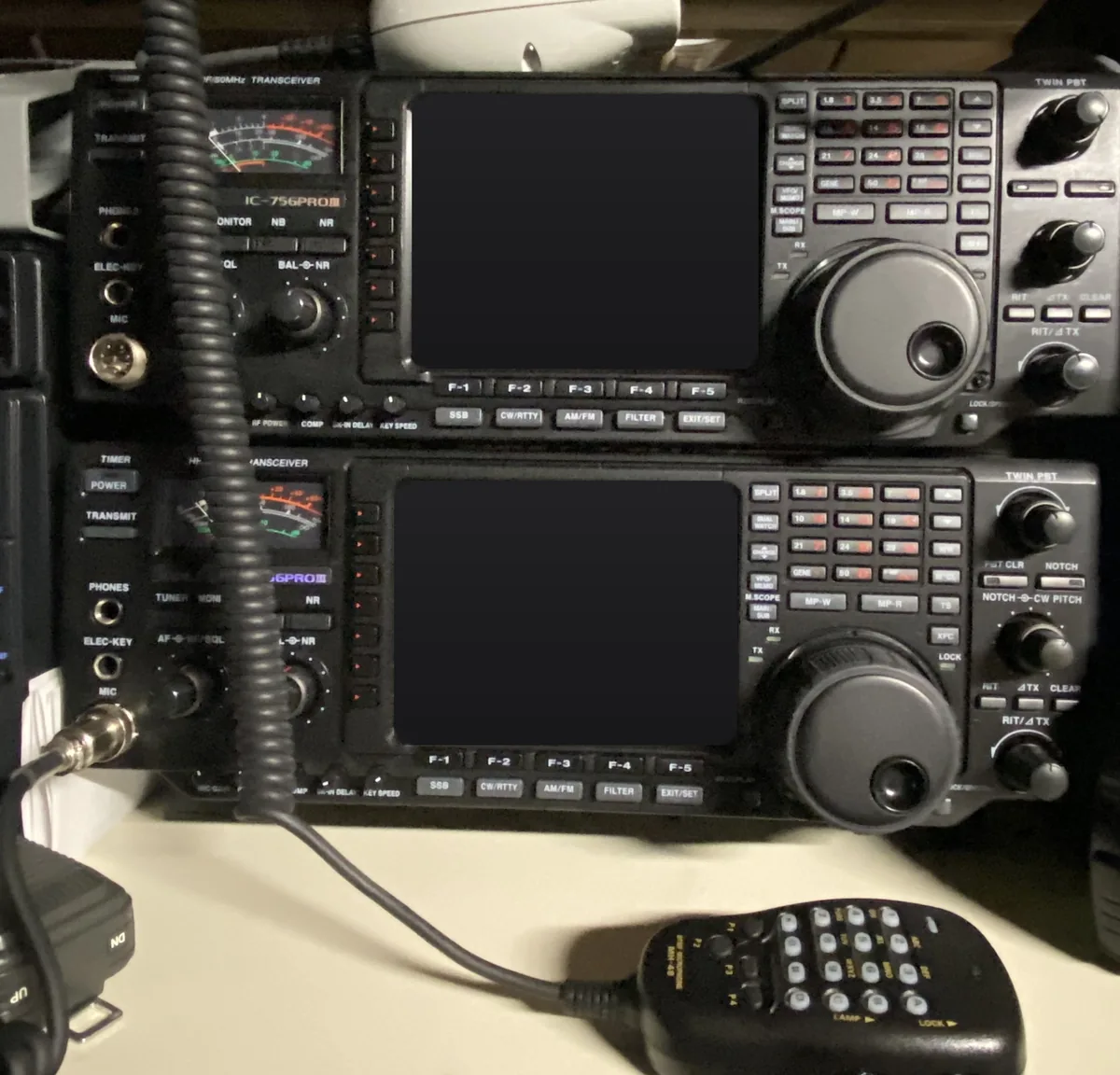
A pair of Icom IC-756PRO IIIs, a base station that is still sought after years after it went out of production.
Photo: OneShack
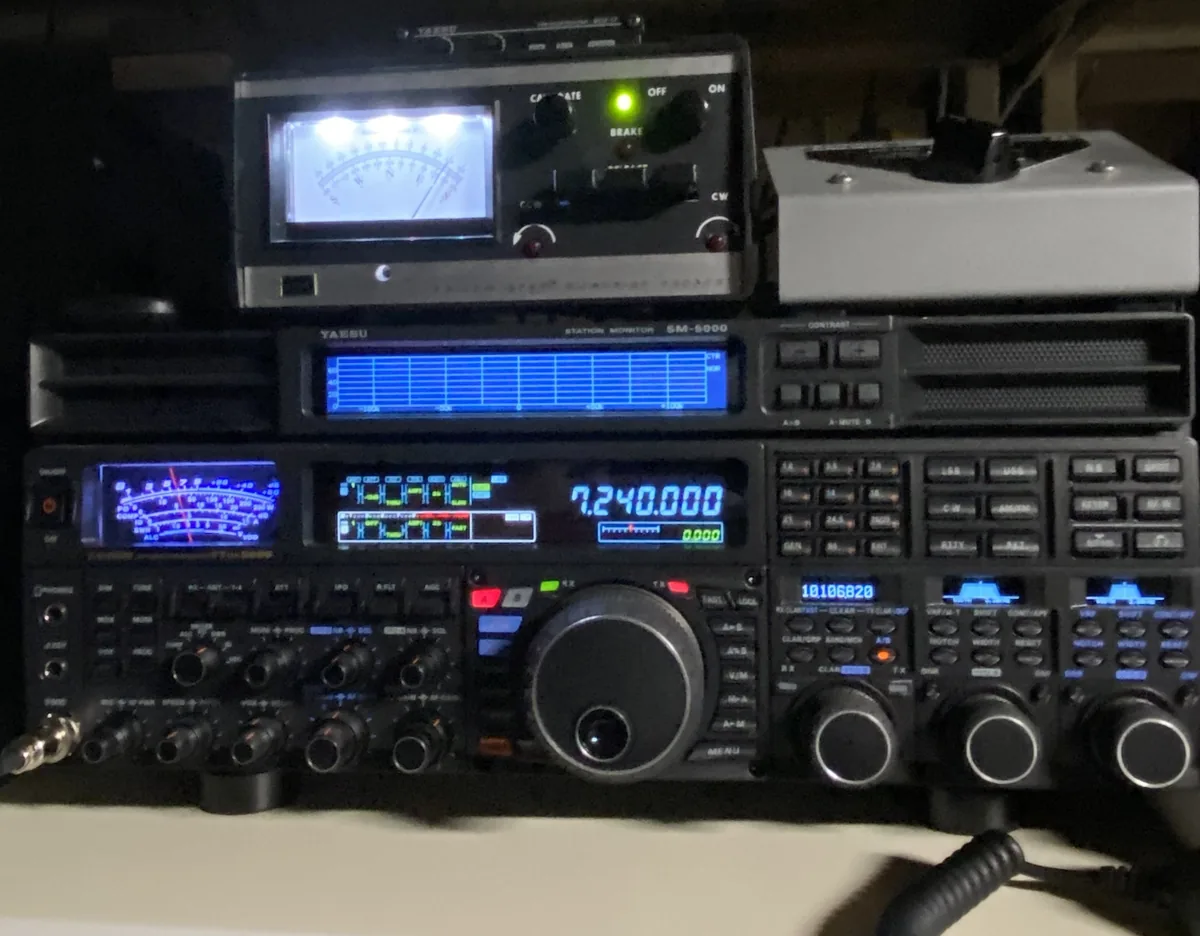
A Yaesu FTdx5000 with its matching station monitor on top. Yaesu’s former flagship now turns up on the used market.
Photo: OneShack
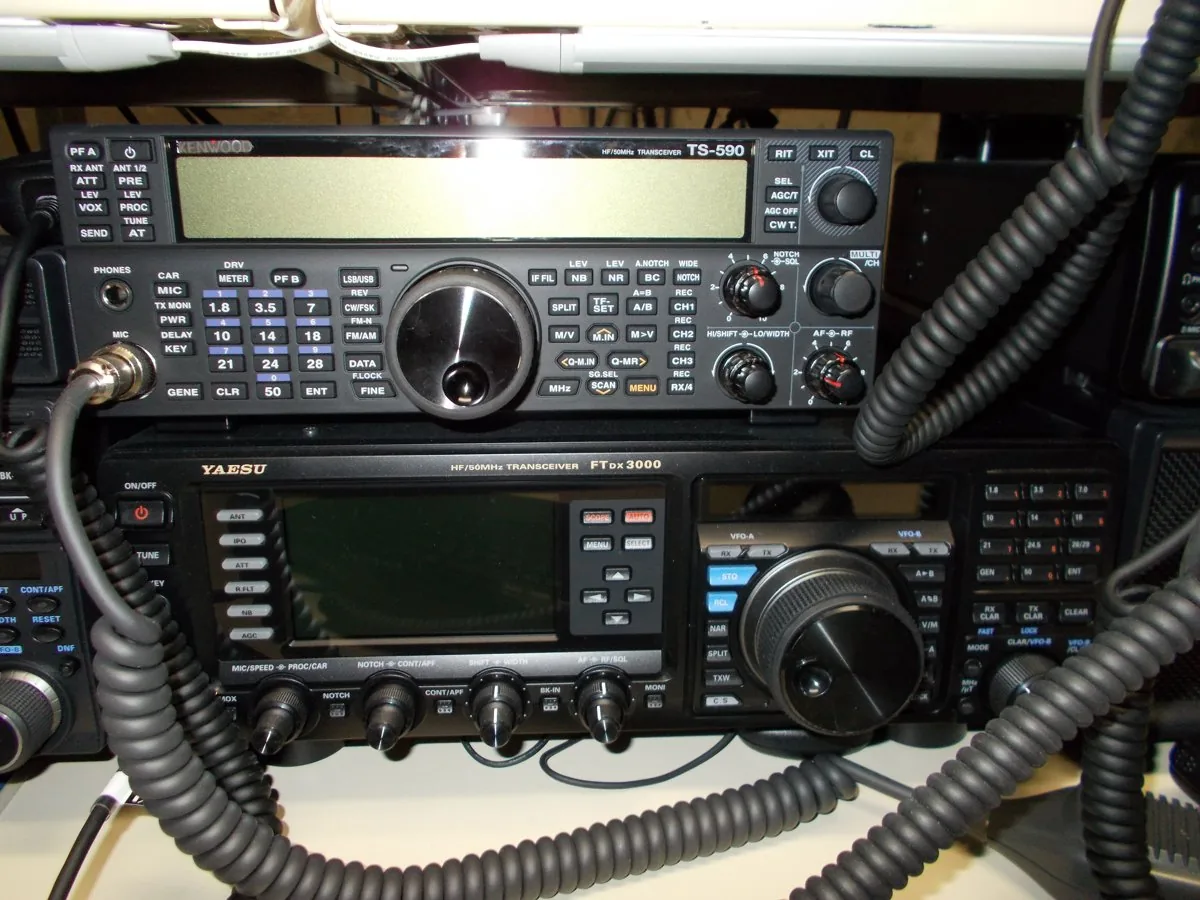
A Kenwood TS-590 on a Yaesu FTdx3000, two capable HF radios that are common on the used market.
Photo: OneShack
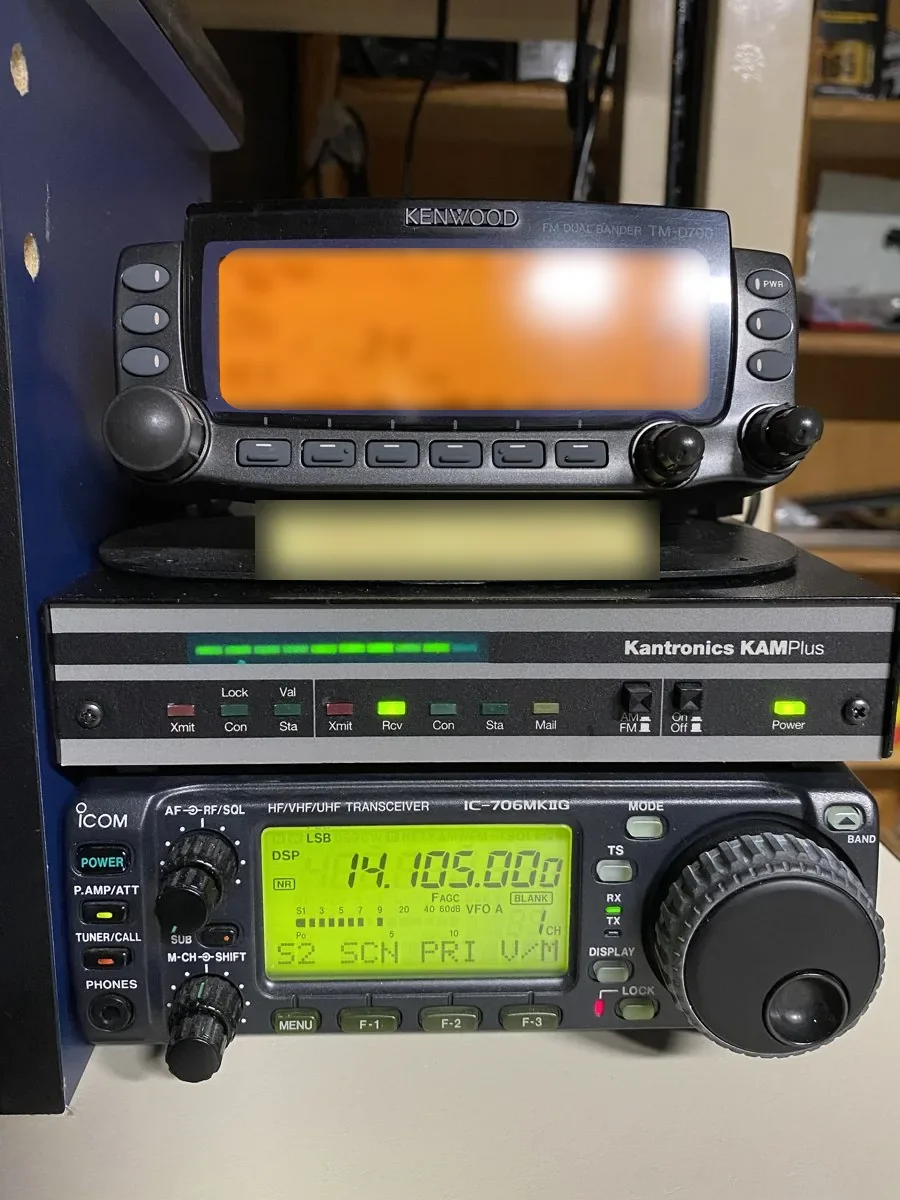
A Kenwood TM-D700 mobile above a Kantronics KAM Plus TNC and an Icom IC-706MKIIG. All three are long out of production and still in daily use.
Photo: OneShack
Buying Used: What to Check
- Hear it transmit into a dummy load or a good antenna, on every band and mode you care about, with a wattmeter in line.
- Listen on every band. A dead band or a deaf receiver is easier to spot in person than to fix later.
- Look inside and underneath for signs of repairs, home modifications, burnt smells or missing screws.
- Ask what comes with it: the power cable, microphone, manual, any fitted options, and for a mobile the control-head cable.
- Check that parts, service and a manual still exist for the model. RigPix and the owners’ groups on groups.io are good places to ask.
- Ask why it is being sold and how it was used. A radio that lived in a car or at a club station may have worked harder than one on a desk.
- Never pay by wire transfer, gift card or a payment method that cannot be reversed to someone you cannot check out. If a price looks too good to be true, it is.
Where to Find Used Radios
Your Club
Many clubs let members post gear for sale in the newsletter, on the website or at meetings. Buying from someone you can meet, who can show you the radio working, is the safest way.
Hamfests and Swapfests
See it, hear it and haggle in person. Some have a test bench with a dummy load.
Online Classifieds on Ham Sites
Busy, and sellers’ callsigns can be looked up. Check the seller’s history and feedback before paying.
Dealers
Some ham dealers sell checked used and trade-in radios with a short warranty. Usually a little dearer, often worth it.
Where to Look Up Specs and Reviews
We deliberately do not reprint power, frequency or price figures here — they change with firmware, region and time, and a wrong number on a reference page is worse than no number at all. For the details, go to the source.
- RigPix ↗
The deep archive. Thousands of models, including everything discontinued. - eHam reviews ↗
Owner reviews going back decades. Read the one-star and five-star ones together. - The manufacturer’s own page
The only place current specifications are guaranteed to be right.
Related Reading
Antennas · Equipment
By Bill Rinker, W6OAV
An SWR of 3:1, or even 10:1, costs far less than most operators think — provided the feedline is good and the tuner is doing its job. And the same fact gives you one wire that works on every band.
Antennas
Question of the Month: How Do Long Dual Band Verticals Develop Gain?
By Bill Rinker, W6OAV
Lengthening a vertical past 5/8 wavelength should send the signal skyward — yet commercial dual band antennas are longer than that and still claim gain at the horizon. Here is how they do it, and how to read their gain figures.
Antennas · Operating
Testing Portable, Stealthy HF Antennas
By Bill Rinker, W6OAV
A magnetic loop and a pair of Hamstick whips, each set up in a covenant-controlled yard and compared against a full size reference vertical over a week of real contacts.
Antennas · Equipment
Ferrites and Common-Mode Chokes: Stopping RF Where It Starts
RF in the microphone, a meter that reads differently when you touch the radio, noise that follows you from band to band — most of it is one fault, and a handful of ferrite cores fixes it.
Antennas · Getting started
Antennas When You Can’t Put One Up
Covenants, a landlord or a small lot do not have to end it. What the FCC rules do and do not cover, and four antennas that work without announcing themselves.
Equipment · Operating
A Guide to Portable Amateur Radio Power
By Bill Rinker, W6OAV
Your portable station is only as reliable as its power source. Choosing between sealed lead acid, lithium-ion and LiFePO₄, sizing the battery, estimating operating time, wiring it safely and keeping it charged with solar.
Equipment · Getting started
A tour of one ham’s station: what each box on the desk does, why it’s there, and what a newcomer really needs from it.
Antennas · Equipment · Getting started
Your SWR Meter Might Be Lying to You
A low SWR reading at the radio doesn’t always mean a good antenna. Here’s why, and how to find out what’s really happening.