Key Points
- The transceiver is the center of the station; everything else on the desk is there to help it.
- An automatic antenna tuner and a linear amplifier only matter once you are comfortable on HF. Neither is needed to get started.
- A rotator is only needed for a beam antenna, not for a wire dipole or a vertical.
- Most ham radios run on about 13.8 volts DC, so a power supply sized for full transmit current is one of the most important pieces.
- A working HF station is a radio, a power supply, coax and an antenna. A VHF station can be just a handheld.
A photo of a busy ham shack can look like the cockpit of a jet. It isn’t as complicated as it seems. Every box does one job, and most stations grew one box at a time over many years. Here is a tour of one working station, and what each piece is for.
The Main Position
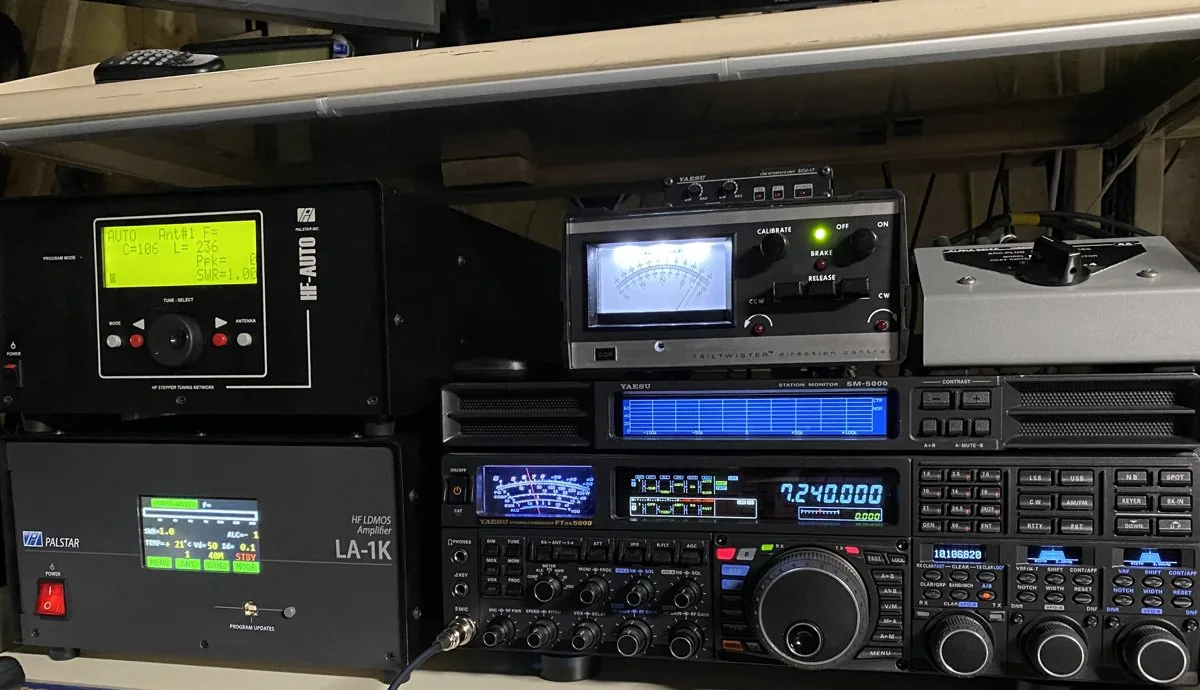
At the center is the transceiver: the radio that both receives and transmits. Everything else on the desk exists to help it. The panel above it is a station monitor, which shows a picture of the band, so you can see signals before you hear them. Many newer radios have this built into their screen.
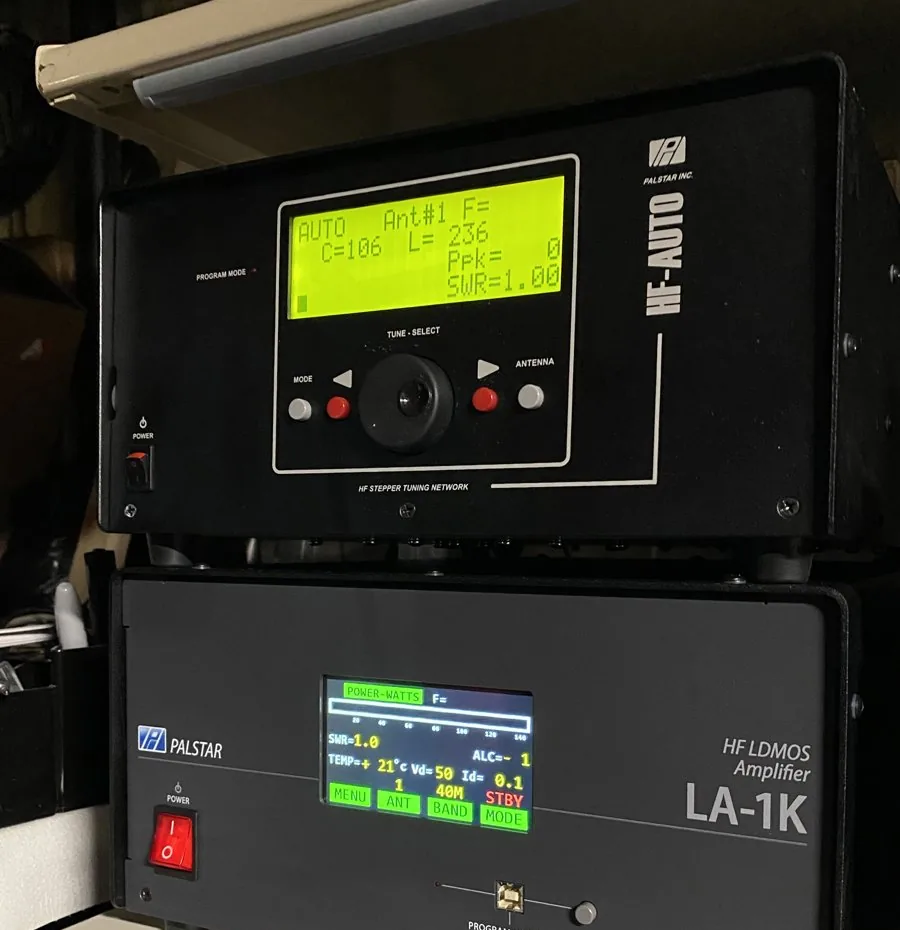
To the left are two boxes that only matter once you’re comfortable on HF. The top one is an automatic antenna tuner, which matches the radio to an antenna that isn’t perfectly matched on every band. Below it is a linear amplifier, which takes the radio’s 100 watts and raises it for the times when a weak signal needs help. Neither is needed to get started.
Turning the Antenna
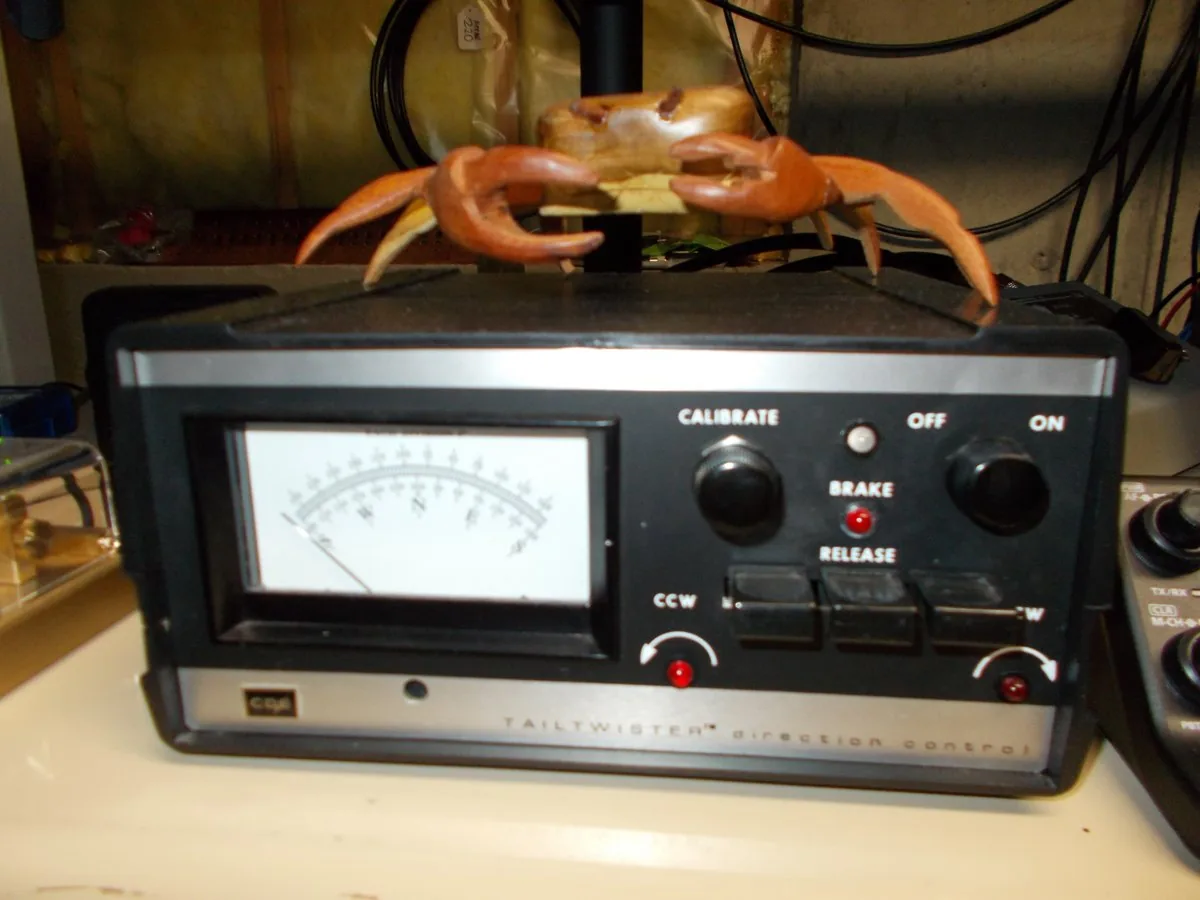
A beam antenna sends and hears best in one direction, so it sits on a rotator that turns it. The control box in the shack sets the direction and shows where the beam is pointing. If your antenna is a wire dipole or a vertical, you won’t need one.
More Than One Radio
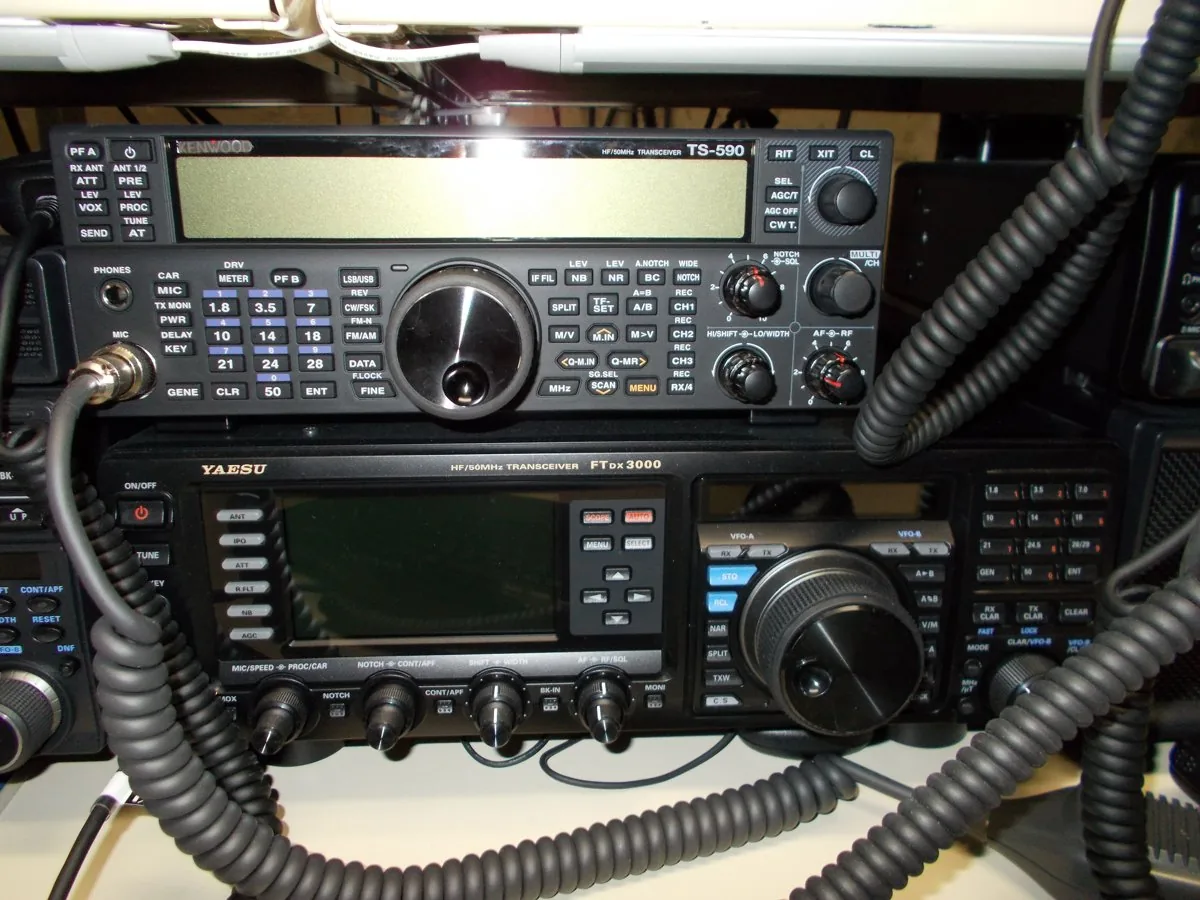
Many hams end up with more than one radio. It isn’t necessary, but it’s useful: one can listen for a rare station on one band while you talk on another, and there’s always a spare if one needs repair.
Power
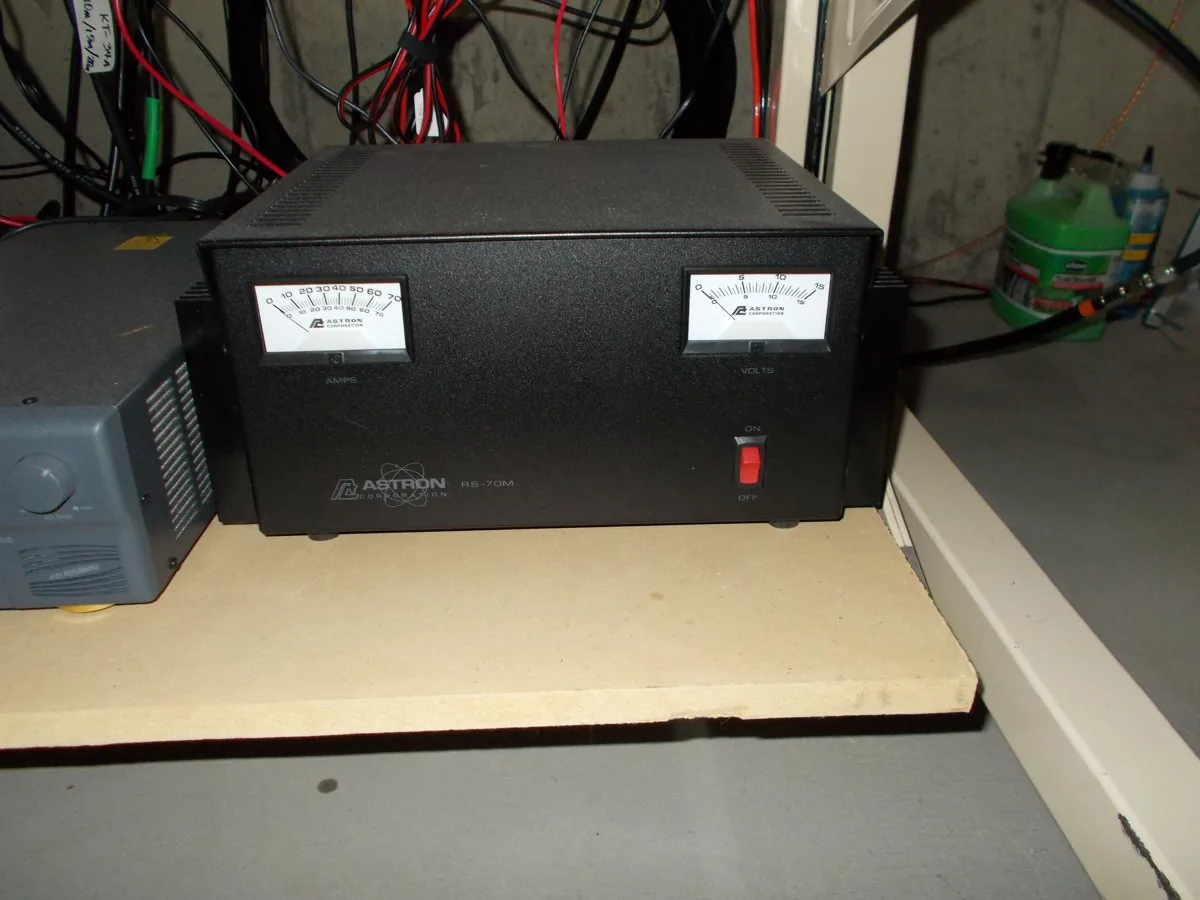
Most ham radios run on about 13.8 volts DC, not straight from the wall. A good power supply, sized for the radio’s full transmit current with room to spare, is one of the least exciting and most important things in the shack. Quiet linear supplies like this one are heavy; switching supplies are lighter, and good ones are just as clean.
The Workbench
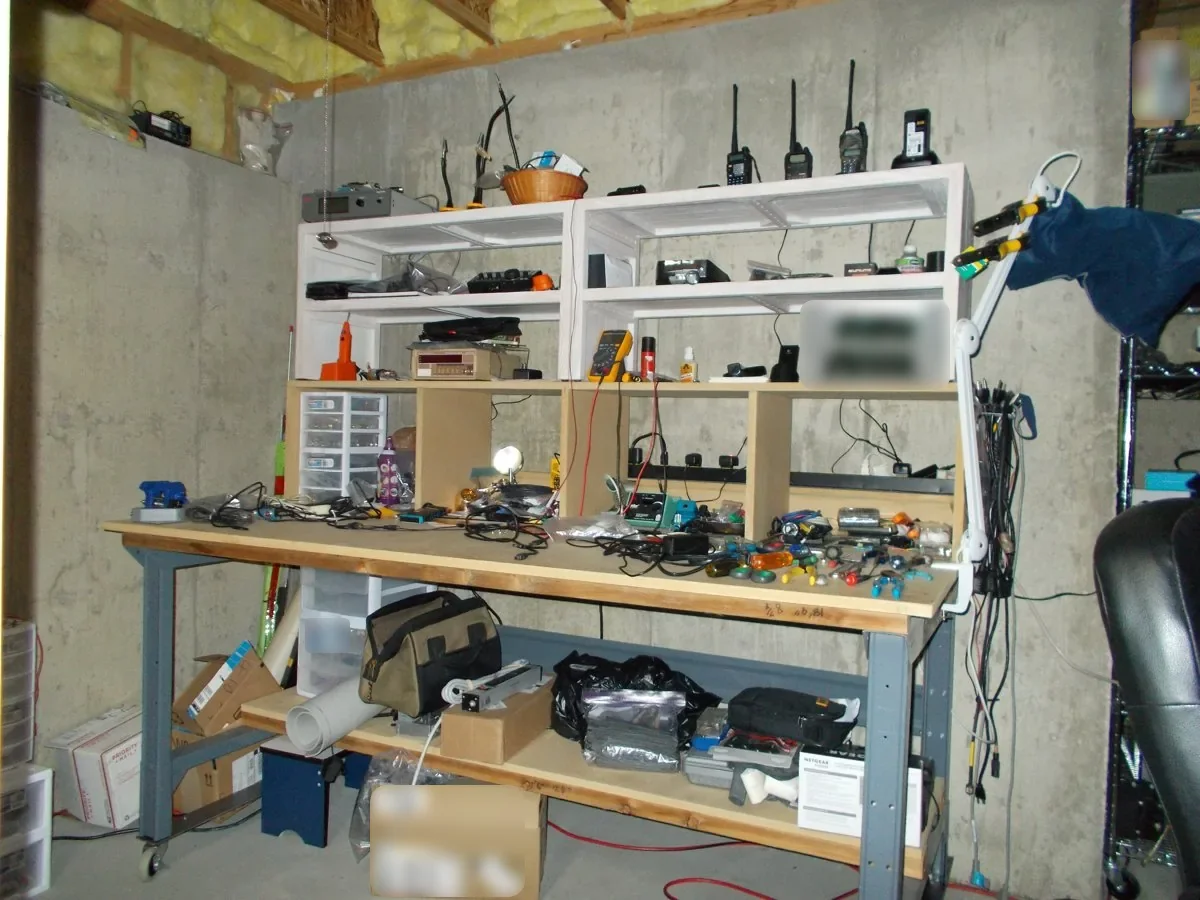
Sooner or later every ham builds something: a cable, an antenna, a kit. A bench with a soldering iron, a meter and some parts bins makes that easy. It’s also where handhelds get charged and programmed.
What You Actually Need
Strip it all away and a working HF station is a radio, a power supply, a length of coax and an antenna. A VHF station can be just a handheld. Everything else in these pictures was added over years, as interests grew. Start small, get on the air, and let the shack grow with you.